
Dance Your Way to Happiness舞出你的快樂之道
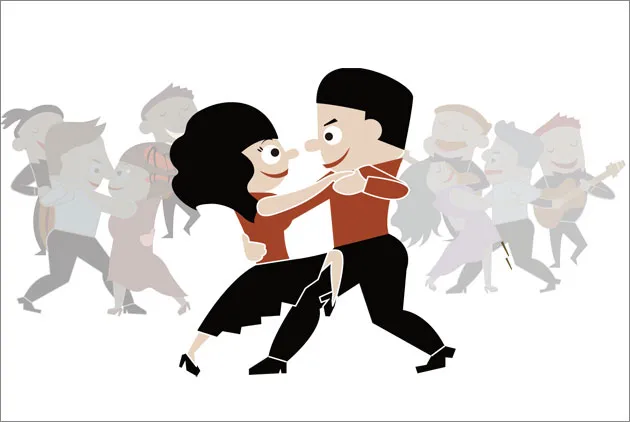 圖片來源:一百隻熊
A question that we very often ask others, and are also frequently asked by others around the office is "So what do you normally do after work? " Some commonplace answers are, "Well, I go to the gym, " "Um... I just go home and watch TV, " "I meet my friends for dinner, " and "I just go to bed because it's so late. " Unlike any of these typical responses, I'm proud to say that I love to kick up my heels and salsa after a long and tiring work day.
My dancing life began not because I wanted to do it, but because my mother was sick and tired of seeing me running around in the park with sheep and cows after school every day. So she enrolled me into a ballet course when I was about six. I fell in love with it instantly and continued for about ten years. Then I left New Zealand to embark on my career as an English teacher, which eventually brought my dancing life to a halt. It wasn't until I rediscovered salsa in a lovely studio in Taiwan that I rekindled my passion for dancing.
Before I knew it, I was in love again, with salsa. The music is not only exhilarating but also vibrant and uplifting. It has the magic to transform people the moment they hit the dance floor. On the health benefit side, because it is a type of partner-dance, it encourages people to connect with others, and eventually, helps them to widen their social circle or even business network. The best part about salsa is its universal lead and follow language, which allows people to go anywhere in the world and dance with anyone.
As my teacher Larry Shao said, "Salsa is easy enough for beginners, but dynamic enough for seasoned dancers; it allows personal styles within its structure; it transcends cultural boarders; salsa is a dance for everybody. "
Although I am not very good at it yet, I can confidently say that it is definitely a great way to unwind, exercise, and more. So what are you waiting for?
在辦公室裡,我們經常問別人、也常被人問:「你下班後都在做什麼?」一般的答案是:「我去健身房」、「嗯……我回家看電視」,或是「我和朋友吃飯聚餐」,以及「因為太晚了,我就直接去睡覺」。但我會很驕傲地說,我的反應和這些典型回答不同,我喜歡在一天漫長疲倦的工作後做我享受的事:跳騷莎舞蹈。
我不是自己開始想學跳舞的,而是因為小時候媽媽受夠了我每天放學後在公園裡跟綿羊和牛到處亂跑。於是,在我大約6歲時,她帶我去報名芭蕾課程。我立刻愛上芭蕾,也持續地跳了10年,但最終在我離開紐西蘭,展開英語教學生涯後停止。直到我來到台灣,偶然接觸到一間騷莎舞蹈教室,才重燃了我對跳舞的熱情。
在我意識到之前,我又再度戀愛了──和騷莎。騷莎的音樂不只令人愉快,也很有活力、讓人精神奕奕。它有讓人在踏進舞池的瞬間改頭換面的魔力。在健康的層面上,因為跳騷莎需要舞伴,能鼓勵人與其他人互動,甚至能幫助擴大社交圈或建立工作人脈。最棒的是,跳騷莎時共通的「帶舞」和「跟舞」規則,讓人無論到世界各處都能和任何人共舞。
就如同我的老師Larry Shao所言:「騷莎對新手來說不難學習,對老手來說又活力十足;它能讓人在舞蹈的架構中保有自我個性,又能超脫文化界線;騷莎是屬於每個人的舞蹈。」
雖然我騷莎功力不深,但我能很肯定地說,這絕對是讓自己充電、運動的絕佳方式。所以,你還在等什麼呢?
Language Corner
-To kick up your heels(做享受的事)means to do things that you enjoy.
-If you are sick and tired of(受夠了)something, you are angry and bored because something unpleasant has been happening for too long.
-When you embark on(著手、從事)something, you start something new or important.
-If you bring something to a halt(讓……停止), you prevent it from happening.
-To rekindle(重燃)is to make someone have a feeling that they had in the past.
-Something is exhilarating(令人興奮愉快)if it makes you feel very excited and happy.
-A seasoned dancer(老手、經驗豐富的舞者)is someone who has a lot of experience dancing and knows how to do it well.
-To transcend(超脫、超越)is to be better or more important than something else.
Katie Deng
來自紐西蘭,目前任職於英國文化協會,專精於成人英語及IELTS考試準備教學。除了台灣,Katie也曾在日本及紐西蘭擔任英文老師。閒暇之餘,喜歡跳騷莎、烘焙、閱讀及出外踏青。Katie的人生哲學就像她的生活態度一樣:用微笑面對所有困難並活在當下。